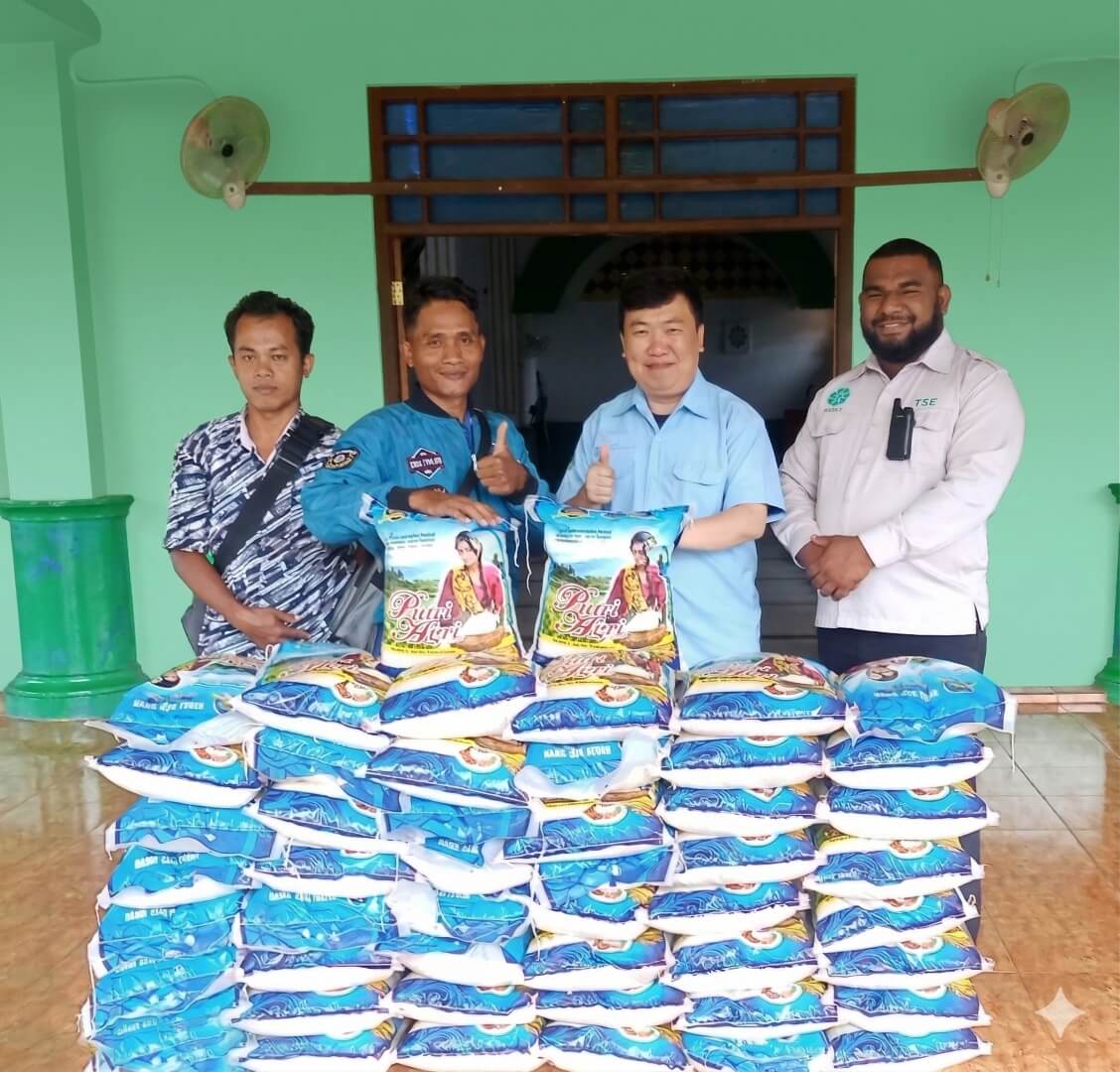

Photo: Aiwat and Subur-made sago flour product
BOVEN DIGOEL – Menggidtop and Okgiyat Ngu Rigiwon are two local dried sago starch brands created by sago farmer groups in Aiwat and Subur subvillages in Subur District, Boven Digoel Regency, South Papua.
Since their inception, both products had been made by hand, which caused the production process to be much slower with fewer output.
The farmer groups had also been facing issues in terms of capital and marketing, despite the huge market. In Papua, sago flour is the main ingredient in many local delicacies, making it a must-have in the kitchen.
As a Papua-based oil palm plantation company, Tunas Sawa Erma (TSE) Group recognizes the potential of self-produced sago flour as a way to improve the local economy.
The firm made a hearty donation of 2 sago grating machines to the Sagu Menggidtop farmer group in Aiwat and Koki farmer group in Subur. It also helped with marketing and sales in terms of packaging assistance to add value.
TSE Group’s move is consistent with its social environment development program or the Corporate Social Contribution (CSC). Farmer group treasurer Della Monsoben said, “Our community was established in 2022. At first, there were a lot of hurdles, from the lack of capital to marketing, but we’re thankful the company stands by us through this support with the equipment and promotion.”
The farmers’ hard work and TSE Group’s aid have allowed Koki and Sagu Menggidtop to record ongoing sales growth — as seen by the massive orders from Boven Digoel and Merauke.
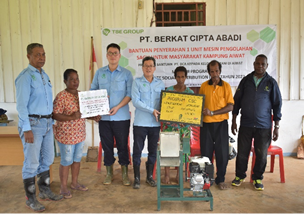 Photo : Sago grating machine handover in Aiwat |
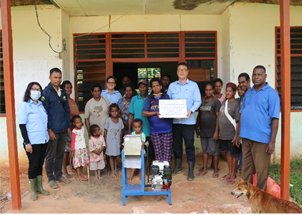 Photo : Sago grating machine handover in Subur |
Sago flour is a derivative product of sago, a traditional staple food material in Papua. It can be used as a main or supporting ingredient in Papuan dishes like papeda, sago sep, grilled sago, and indigenous cakes.
Much of this product is made up of pure carbohydrates, which are part of macronutrients (nutrients needed by the body in large amounts to provide energy and enable brain functioning). As a matter of fact, carbohydrates make up 85.6% of the nutritional content, while fiber contributes only 5%. Sago flour also contains 355 calories and 0.5 grams of protein per 100 grams of serving. (PR)