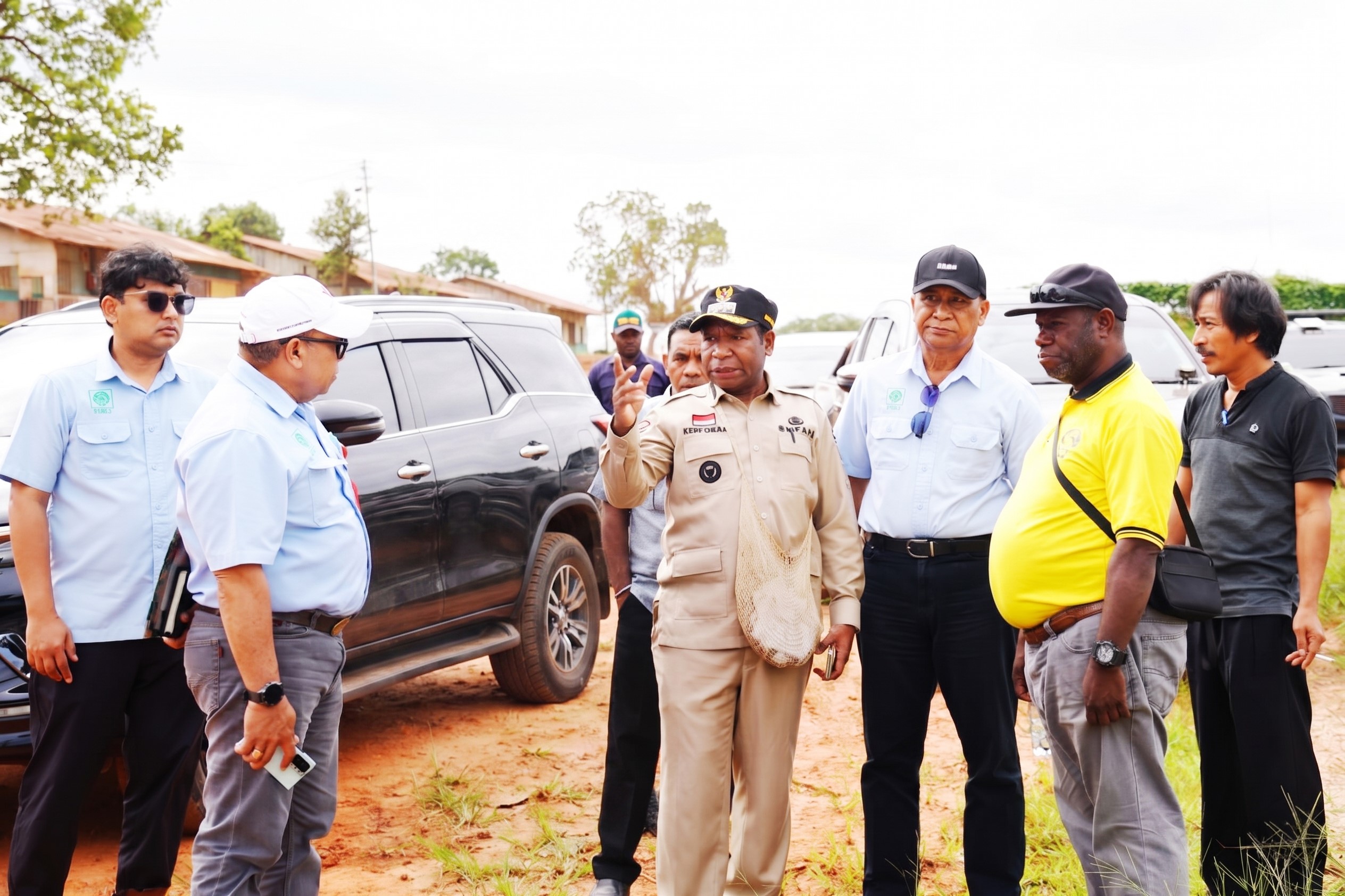
Photo: The TSE Group team, Boven Digoel Regent Roni Omba, Boven Digoel government officials, and local indigenous institution members at the alternative location for the public market project. This site is chosen for its safety and convenience
BOVEN DIGOEL – On Thursday (6/4/2026), TSE Group subsidiary PT Tunas Sawa Erma (TSE) sat down with the Boven Digoel Regency Government to discuss a public market project for local vendors at Jair District, Boven Digoel Regency (South Papua). Their goal is to establish a proper venue for these vendors that reflects good economic governance.
The talk was part of a visit led by Boven Digoel Regent Roni Omba, who came with officials from the local Department of Community and Village Empowerment as well as indigenous institutions. This group of guests was earlier welcomed by TSE Group’s PR General Manager Daniel Sim Ayomi and TSE executives.
Altogether, the parties represented the government, private sector, and indigenous community in a forum aimed at facilitating trade for Papuan mothers. It resulted in a range of suggestions for the site location.
Omba said this plan is included in local government efforts to improve economic infrastructure.
“Our focus is to keep vendors off the ground and provide them with better facilities to sell their goods.”
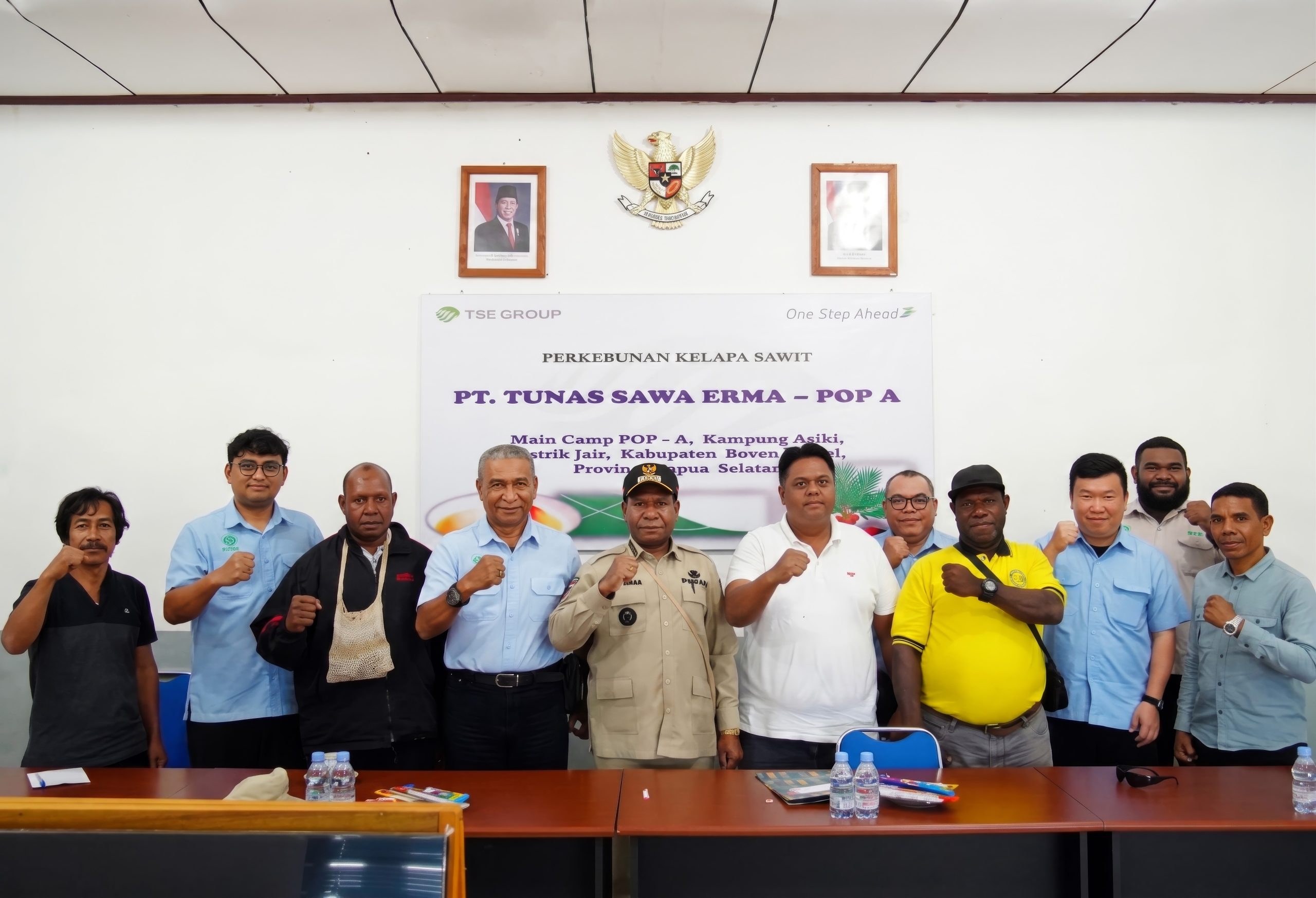
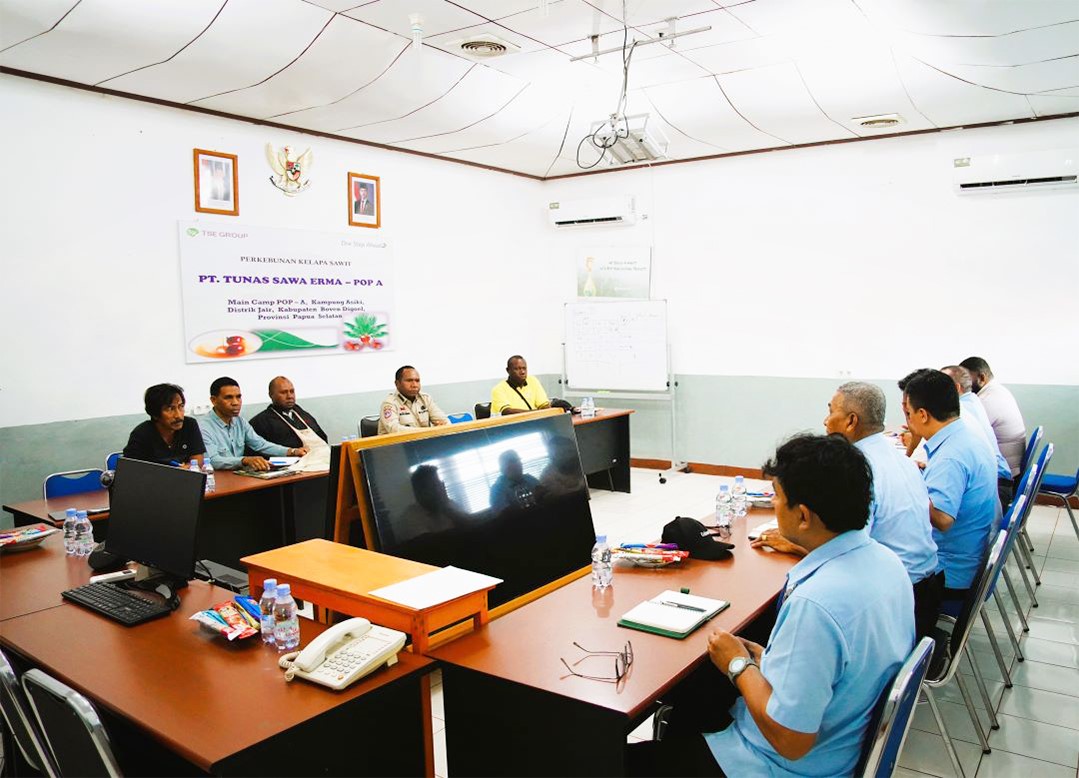
Photo: TSE Group executives and Boven Digoel Regent Roni Omba discuss ways to financially empower indigenous mothers at PT TSE’s office
Local merchants — including produce and essentials suppliers — have been using whatever space is available for operations. This brings into consideration the aspects of safety, comfort, accessibility, and alignment with long-term spatial strategies.
Moving forward, TSE is open to coordinating with government and indigenous representatives on this matter, executive Taeyul Hwam declared. TSE Group, he added, supports programs that directly impact communities.
“We welcome further discussions with the local government and community. We share the same goal, which is finding the safest, most ideal location for maximum economic impact.”
This project is hoped to significantly drive financial independence among indigenous South Papuans. Once completed, the market seeks to improve economic resilience for households, provide more productive business spaces, and preserve the key roles of Papuan mothers in their social and economic spheres. (PR)