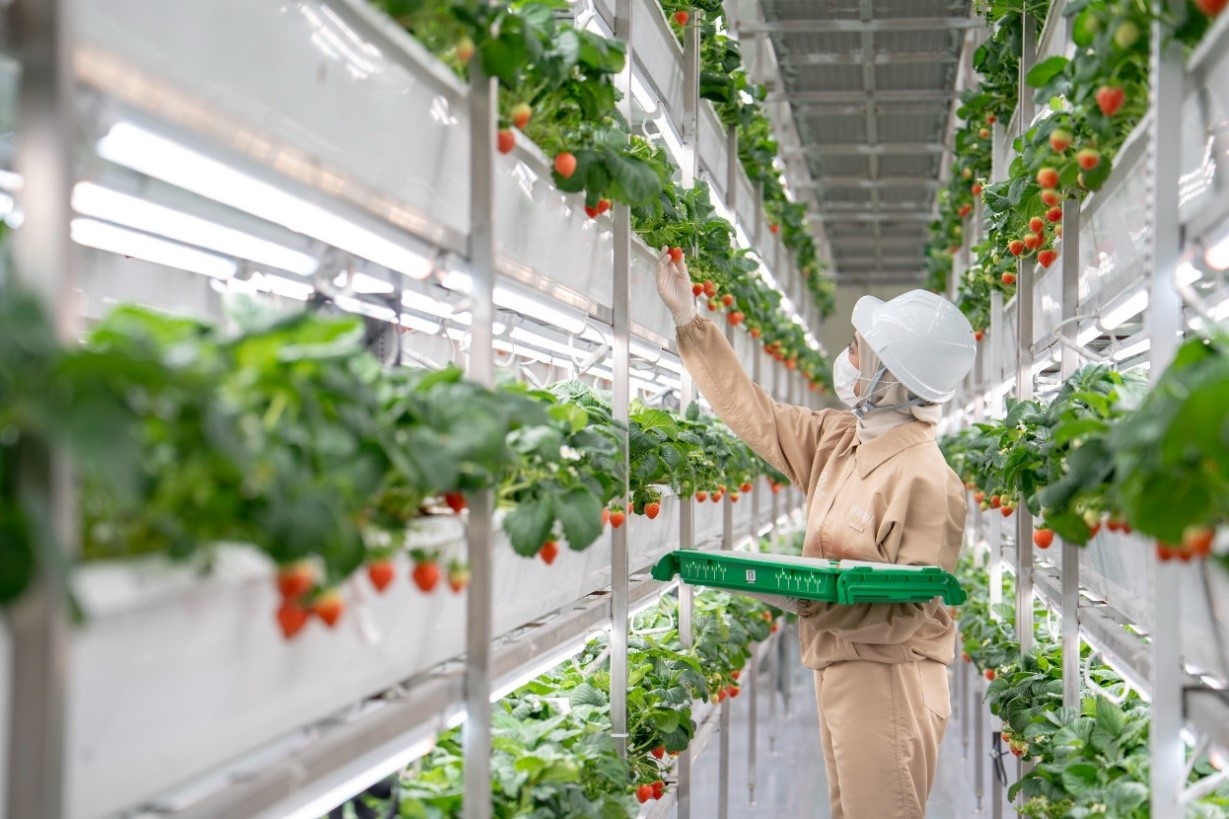
Photo: A staff member inspecting plants at PT Agro Putra Pratama’s indoor farm. The company uses vertical cultivation and climate control to maintain produce freshness and quality
JAKARTA – Jukhyang is South Korea’s leading strawberry cultivar known for its natural sweetness, fragrant aroma, and appealing visuals. This variety is grown in Indonesia by PT Agro Putra Pratama (APP) under the brand name Soofresh.
The company uses indoor farming technology and a climate-controlled system to make cultivation possible in tropical weather.
“Indonesia’s climate is hot and humid, so we implement an indoor farming system with a controlled environment. This allows us to manage temperature, humidity, lighting, watering, and feeding more precisely,” said Nicholas Younseok Choi, APP’s chief operating officer at the Soofresh Farm, Daan Mogot (West Jakarta) on Monday (11/16/2026).
The process of growing Jukhyang strawberries begins with selecting high-quality seedlings, which are then evaluated for health and viability. Staff members later prepare specialized growing media before placing them with the seedlings in vertical racks.
To promote maturation, APP employs modern agricultural methods, such as Controlled Environment Agriculture (CEA), which enables strict management of temperature, humidity, lighting, and nutrients. The company also equips its farm with LED lights to encourage photosynthesis, as well as a fertigation system that delivers water and fertilizer according to seedling needs.
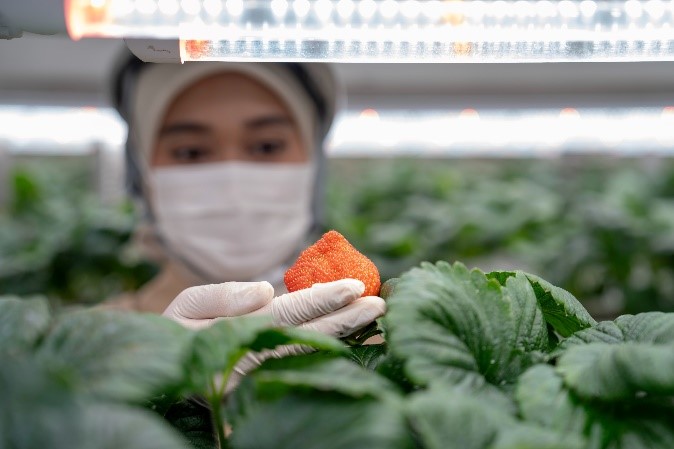
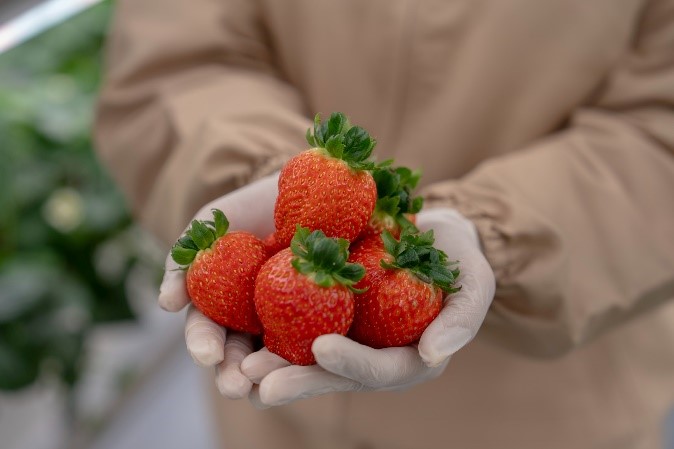
Photo: Strawberries are evaluated for ripeness and other quality indicators (freshness, color, overall physical characteristics) to ensure compliance with top-grade produce standards
Further down the process, different temperatures are set for day and nighttime operations to support flower and fruit formation. At this stage, regular pH and electrical conductivity (EC) measurements are taken to monitor nutritional balance and ensure optimal growth.
Harvests reach up to three tons of strawberries per month, with each of APP’s three “cultivation rooms” — Aster, Bloom, and Canna — contributing one ton, said business development manager Diah Devitasari.
“When we harvest, we sort the fruits based on ripeness, color, and other physical characteristics before applying the proper post-harvest treatment to keep them fresh.”
The company focuses as much on comprehensive quality control as it does on optimizing growth. APP’s quality management measures range from plant health tracking, pest and disease control, to pollination monitoring.
By continually improving farming methods and conducting technical evaluations, APP aims to make premium Korean strawberries more accessible while preserving freshness and quality. (PR)